
Pre-drywall Phase 2 Inspections – Are they needed?
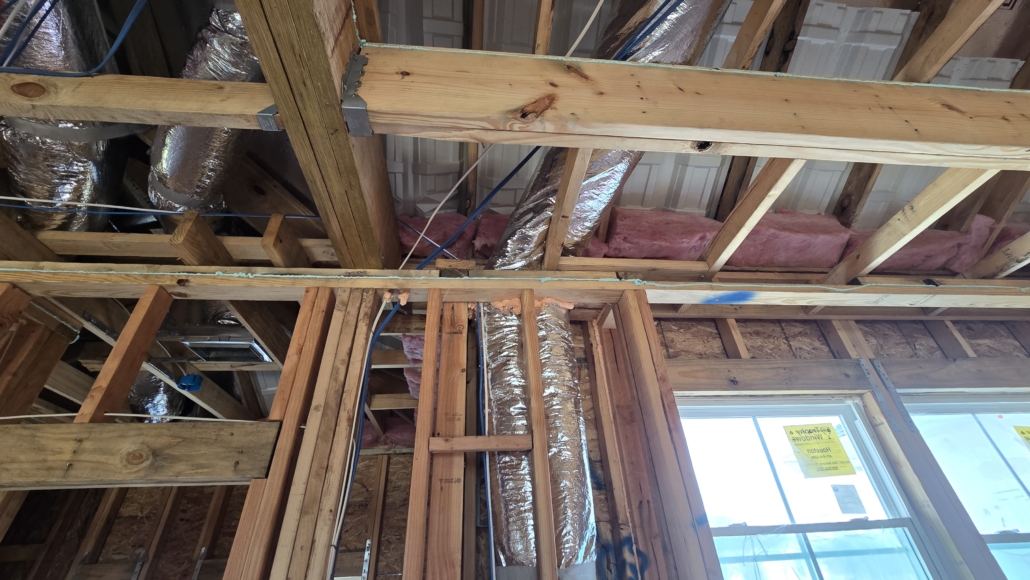
From my professional perspective as a home inspector, the pre-drywall phase is the single most revelatory moment in a home’s construction. Once the framing, electrical, plumbing, and HVAC systems are roughed in, the home’s skeleton is completely bare. To the untrained eye, it looks like a chaotic web of wood and wires, but to a certified inspector, it is a brief window of total transparency. This is our only opportunity to evaluate the true structural integrity and craftsmanship of the build before it is sealed away forever behind sheets of drywall.
Throughout my career, I have caught countless critical errors during these Phase 2 inspections that would have otherwise become a homeowner’s living nightmare. I frequently discover structural issues like unbuckled roof trusses, severely notched load-bearing studs, missing fire blocking, and improperly supported floor joists. On the mechanical side, it is common to find pierced electrical wiring, unglued drain pipes, and crushed ductwork. If these defects are covered up, they inevitably manifest years down the road as mysterious leaks, poor airflow, sagging floors, or even electrical fires—problems that are incredibly destructive and expensive to fix after the fact.
As inspectors, we often hear buyers say they trust the municipal code enforcement or the builder’s supervisor to catch everything, but those entities are stretched incredibly thin. Municipal inspectors often spend mere minutes on a site, whereas an independent inspector will dedicate hours to examining every single framing member and connection. Providing a builder with our detailed, photo-documented pre-drywall report gives you massive leverage. It ensures that systemic errors are corrected when they are still simple and cheap to fix, safeguarding your financial investment and ensuring your family’s future safety.


Leave a Reply
Want to join the discussion?Feel free to contribute!